Geography
Our Intent
We are committed to helping our students become experts in Geography by encouraging a deep understanding of the world’s regions, environments, and how humans interact with them. Our curriculum is carefully designed around a select number of global locations that span continents, hemispheres, and biomes, including California, Brazil, Iceland, the UK, and Italy. Through these locations, our students gain a comprehensive understanding of geography, focusing on key themes and concepts that will equip them with the skills and knowledge to explore, analyse, and interpret their world.
Our Key Focus Areas:
-
Focused Global Locations: We have chosen a specific set of regions across the world to study in-depth. These locations—ranging from the Mediterranean climate of Italy to the vast wilderness of California, the rainforests of Brazil, the unique landscapes of Iceland, and the diverse geography of the UK—allow our students to explore a range of climates, biomes, and cultures. By focusing on these select locations, students gain an expert-level understanding of how physical geography, human activity, and culture interact in different parts of the world.
-
Golden Threads: Throughout our curriculum, we thread core geographical concepts—our Golden Threads—into every lesson. These threads allow our students to see and understand recurring patterns and connections between different places and topics. The five Golden Threads that run through our Geography curriculum are:
-
Settlement: How and why people choose where to live, the development of urban and rural areas, and the factors influencing settlement patterns.
-
Trade: The exchange of goods and services, both locally and globally, and how trade impacts economies and environments.
-
Weather and Climate: Understanding the weather patterns, climate zones, and how they affect life in different regions. Students learn to differentiate between weather and climate and understand global climate issues.
-
Land Use: How land is used for farming, industry, recreation, and housing, and the impact this has on the environment.
-
Local Area: A deep dive into the local geography, helping students understand their immediate surroundings, how it connects to global patterns, and the importance of preserving local ecosystems.
-
Sustainability: Exploring how human actions can impact the environment, with a focus on sustainability, conservation, and how to make positive environmental changes.
-
-
Key Vocabulary and Visual Support: Geography can involve complex terminology, so we ensure key vocabulary is introduced and reinforced with visual aids. Each lesson introduces specific terms, supported by images, maps, and diagrams, to help students build a strong understanding of the language of geography. By using visual aids alongside vocabulary, we ensure accessibility for all learners, regardless of their learning style.
-
Map Skills and Research: As students study these global locations, they will strengthen their map-reading skills, using different types of maps—physical, political, thematic, and digital. These skills are integral to understanding geographical information. In addition, students are encouraged to conduct research on their chosen locations, allowing them to deepen their knowledge and develop independent learning skills.
-
Engaging Tasks and Critical Thinking: To keep our students engaged and to challenge them, we use a variety of learning tasks, including practical activities, group discussions, creative projects, and interactive tasks. These tasks are designed to encourage critical thinking and help students apply their knowledge of geography to real-world scenarios, whether it's by solving a problem related to sustainability or analysing how climate affects trade in Brazil.
-
Fieldwork and Real-World Connections: Fieldwork is an essential part of our Geography curriculum. By taking learning beyond the classroom, we allow students to experience geography first hand. Whether it's investigating local land use patterns, studying weather conditions, or exploring the natural environment in their community, fieldwork helps students make meaningful connections between classroom learning and the real world. This hands-on approach deepens their understanding, fosters curiosity, and encourages them to become active participants in their environment. Through local field trips and practical investigations, we bring geography to life and help students see how geographical concepts apply to their own lives.
Becoming Geography Experts:
The aim is for our students to emerge as confident geography experts. By focusing on a select number of locations, our students will develop a strong foundation in key geographical concepts, while also developing the skills to explore new places and issues with curiosity and insight. As students move through the curriculum, they will see the relevance of geography to their everyday lives and understand how global and local issues connect.
Through this approach, we aim to inspire lifelong learning, foster a sense of global citizenship, through embedding our Global goals and Unicef rights, and equip our students with the knowledge and skills necessary to thrive in an increasingly interconnected world.
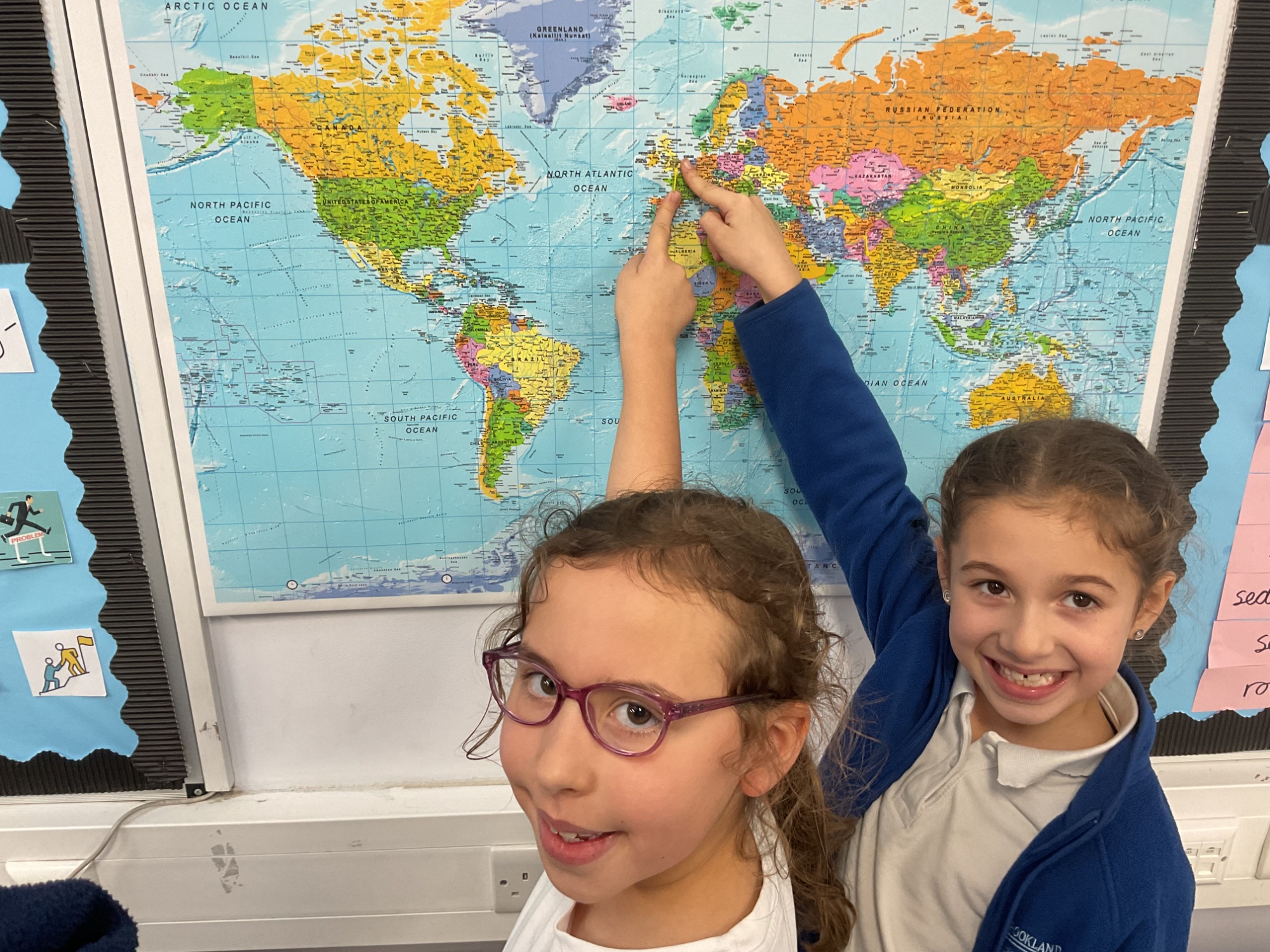
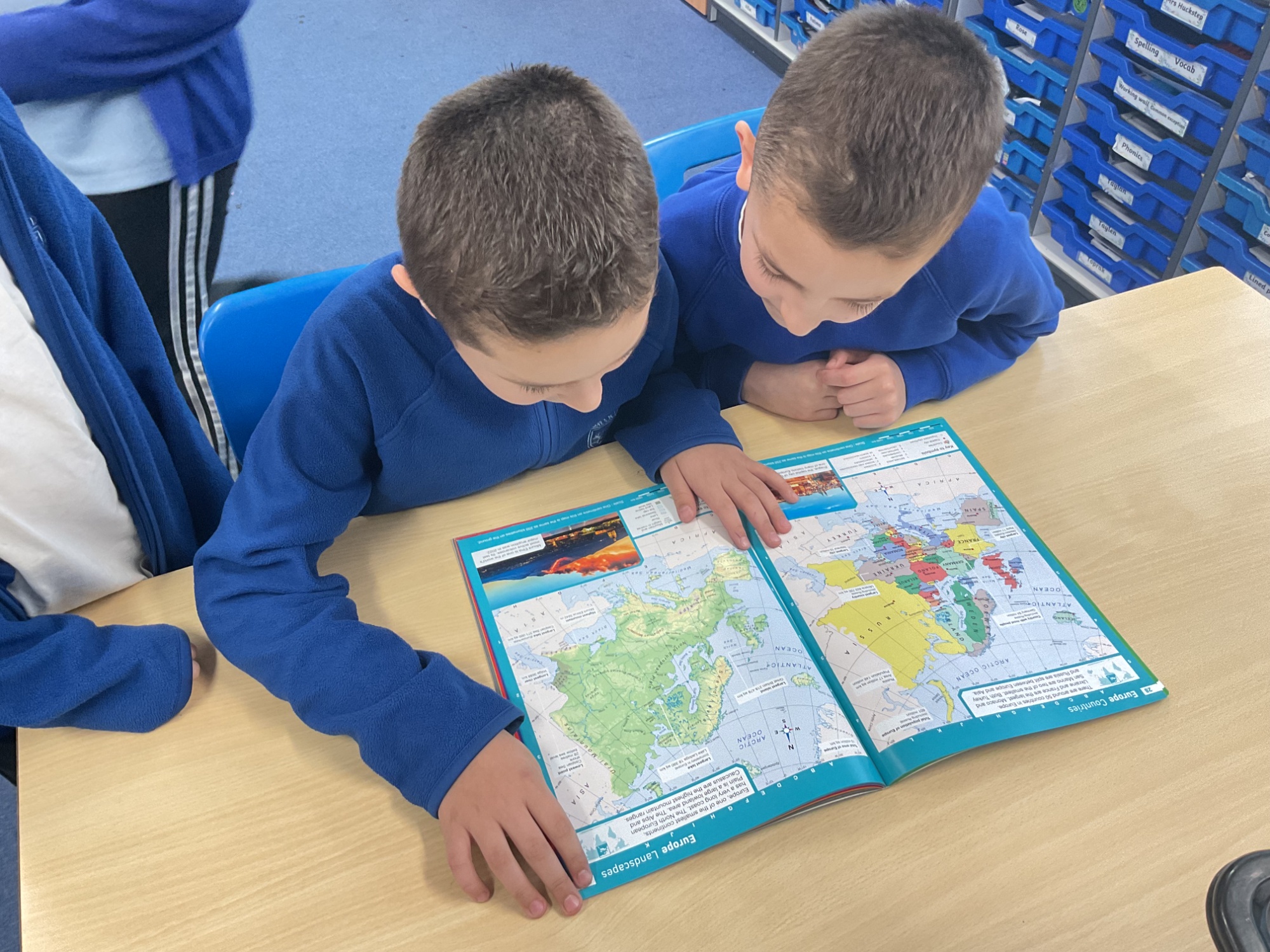
"I enjoyed learning about Iceland. It has geothermal pools and volcanoes. We put a flag in our map to help us remember where Iceland is." – James, Year 5
"In Iceland, they use the heat from magma to produce energy." – Lauren, Year 5